Some leaks announce themselves with a puddle. Others hide inside walls, under a slab floor or underground between the meter and the house, and show up only as a higher water bill, a stain, a musty smell or the sound of water running when everything is off. Finding the leak without opening more wall or floor than necessary is the whole job.
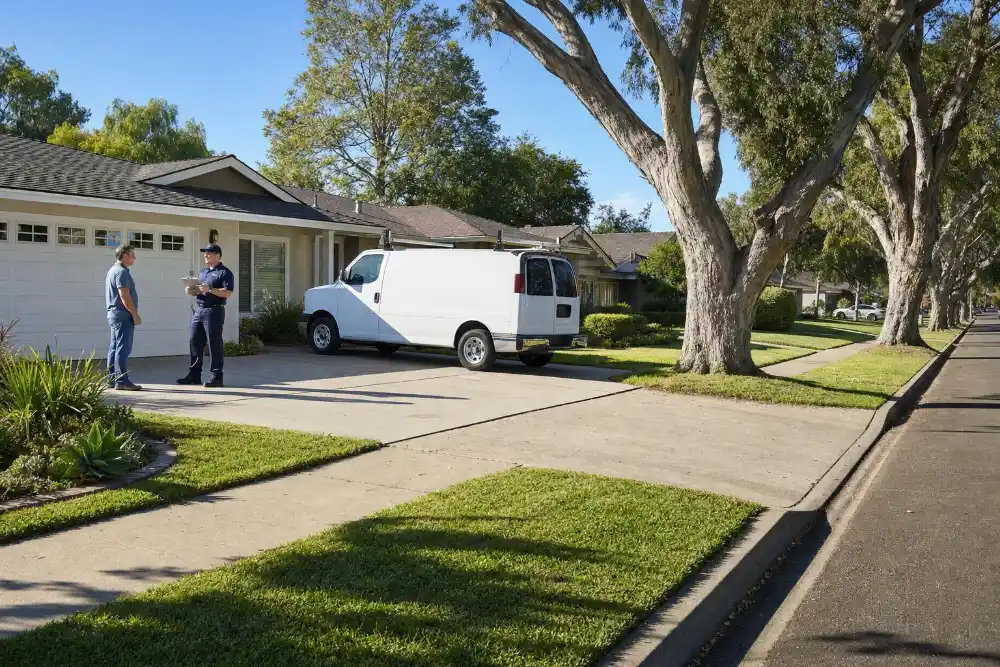
The plumber you are connected with locates the leak, explains the repair options and gives you a price before any work begins. Callbacks and on-site availability vary.
Signs of a Hidden Leak
- A water bill that rises with no change in how you use water.
- The sound of running water when every fixture is off.
- Stains, bubbling paint or soft drywall on walls or ceilings.
- Warm spots on the floor, which can mean a hot water line leaking under a slab.
- Damp or unusually green patches in the yard along the water line.
- Low water pressure at several fixtures.
A Simple Check You Can Do First
As general guidance, turn off every faucet, toilet and appliance that uses water, then look at your water meter. If the meter keeps moving, water is going somewhere. Long Beach Utilities reminds customers that the house shut-off valve "is not the same as the water meter" (emergency preparedness), so know where both are. If closing the house valve stops the meter, the leak is inside the house. If the meter still moves, the leak may be in the line between the meter and the house, which is on your side and is plumbing work.
Long Beach Drought Rules Cover Leaks
Long Beach has been at Level 1 of its Water Shortage Contingency Plan since August 1, 2023, and its rules prohibit wasting water through "plumbing or pipeline breaks, leaks, or malfunctions," according to Long Beach Utilities. We did not find a stated deadline for fixing a leak, but a known leak is worth fixing promptly for your bill, your floors and the rules.
Slab Leaks
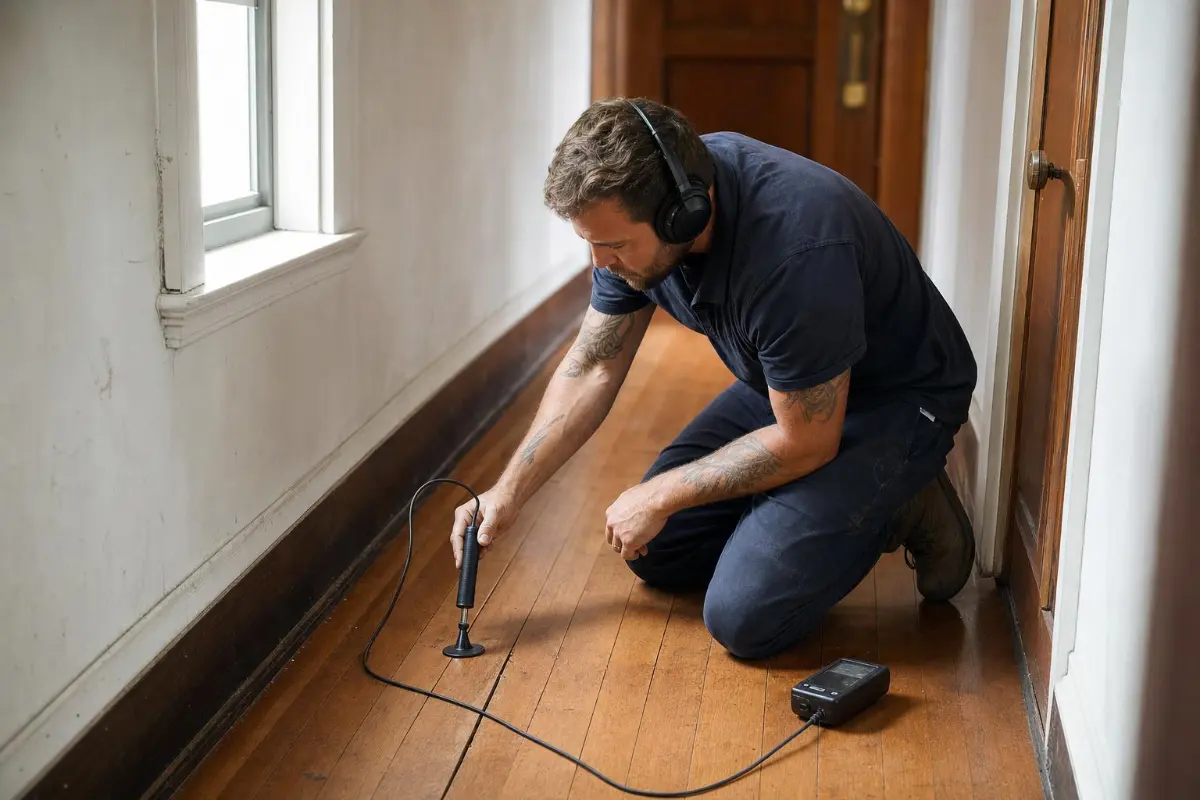
In homes built on a concrete slab, a supply line under the floor can leak for a long time before anyone notices. Signs include warm spots, the sound of water under the floor, cracks in flooring and a meter that never stops. A plumber may use listening equipment, pressure tests or thermal imaging to narrow down the spot. Once found, the options are usually to open the slab and repair the pipe, or to reroute the line through walls or the attic and abandon the leaking section. Ask which makes sense and why.
Gas Leaks on Your Side of the Meter
Leak detection is not only about water. In Long Beach and Signal Hill, Long Beach Utilities owns the gas line from the street to its meter, but you own the "Customer Houseline" from the meter to the building and out to outdoor gas appliances such as pool heaters, spas and barbecues, and the utility does not maintain it (customer-owned gas lines). The utility says buried sections can corrode and leak, that owners should inspect them periodically and repair leaks and corrosion, and that licensed plumbers and leak detection companies can help.
If you smell gas, do not go looking for the leak. Long Beach Utilities says to "immediately evacuate the area" and call 911 or its gas emergency line from a safe spot, and not to light a match, candle, flashlight or cigarette. Gas utility service in Long Beach comes from Long Beach Utilities, not SoCalGas (City of Long Beach). Once it is safe, a plumber can find and repair a slow leak on the houseline, which needs a permit.
Older Pipes and Repeat Leaks
About 56 percent of Long Beach's occupied homes were built before 1960, by our math from the city's Housing Element data. As general plumbing knowledge rather than a Long Beach count, galvanized steel supply pipe from that era corrodes from the inside and tends to spring pinhole leaks again and again. If leaks keep turning up in the same kind of pipe, ask whether repiping a section or the whole house makes more sense than another patch.
On lead, Long Beach Utilities' 2025 water quality report says the utility has no lead or galvanized service lines in its distribution system that require replacement, based on an October 2024 inventory, and no home tap sampled was over the lead action level. That covers the utility's service lines, not the pipes inside your home.
What Leak Detection Costs
The plumber sets the price. We did not find Long Beach figures, so these are guides labeled by source:
- Leak detection, national (HomeAdvisor, labeled 2025): about $280 typical, with most paying $150 to $400 (HomeAdvisor).
- Slab leak repair, national (same page): average $2,280, normally $630 to $4,400, with a full range of $300 to $6,750.
- Burst or leaking pipe, emergency (HomeGuide, undated, not tied to a city): $500 to $5,000; a gas leak at one appliance $350 to $2,000, or $1,000 to $5,000 for a buried line (HomeGuide).
- Los Angeles service call (Angi, undated): $100 to $250 (Angi, Los Angeles).
What moves the price: how the leak is found, whether it is under a slab or inside a wall, how much has to be opened and patched, repair versus reroute, the pipe material and permit fees.
Permits and Licenses
Long Beach's Do I Need a Permit page says fixing a leak or basic defect with no new materials is exempt. Replacing water piping is not: the city's fee schedule charges $14 per fixture for one to five fixtures and $1.00 for each one over five, on top of a $100 minimum permit fee, and gas piping work needs a plumbing permit too (permit FAQ). Hire a CSLB C-36 plumbing contractor and keep the down payment to no more than 10 percent or $1,000, whichever is less, as the CSLB's consumer pamphlet advises.
A note on how this works: Long Beach Plumber Help is an independent referral service, not a plumbing company. Your request goes to an independent plumbing contractor who serves Long Beach, and there is no charge for the referral.